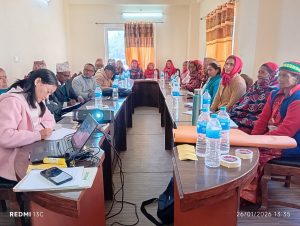
Reflecting on Progress: Mid-Term Evaluation of NLRP II

The mid-term evaluation of NLRP II is being conducted by the Alliance for Research and Development (ARDS) from 18 to 28 January 2026 in six purposively selected districts (Jhapa, Lalitpur, Nawalpur, Bardiya, Surkhet, and Kanchanpur). Aligned with national priorities such as the Sustainable Development Goals and the 15th Five-Year Development Plan (2020–2025), NLRP II also contributes to Caritas Nepal’s strategic areas of food security and climate change, enterprise and cooperative development, and social and child rights. The evaluation covers the project period from July 2023 to December 2025 and uses a participatory, mixed-method approach to assess relevance, effectiveness, sustainability, impact, and key cross-cutting issues including gender equality, safeguarding, disability inclusion, and climate change adaptation. It includes a household survey of 342 participants from 1,536 households, 27 FGDs, 36 KIIs, and 2 to 4 selected most significant change stories, with outcome-harvesting reflections to capture meaningful changes in livelihoods, resilience, and community well-being.


Leadership Development and Club Managements Training for Child Club Members

On 6 January 2026, a training on “Leadership Development and Club Management” was conducted at Shree Saraswati Basic School, Dailekh, for the child club members and teachers of the Shree Fulbari Shanti child club. The program brought together 24 participants, including 12 students and 12 teachers, to build their leadership and organizational skills. The training aimed to empower members to take active roles in club activities, improve teamwork, and develop problem-solving abilities, while also enhancing teachers’ capacity to guide and support the club effectively.
Capacity-Building and Learning Initiatives for Children in Kanchanpur

On 6 January 2026, orientation sessions on child rights, child protection, child participation, and child development were conducted at the school level in Laljhadi, Kanchanpur. The first session took place at Laljhadi-2, Kanj, with 26 participants, while another session was held at Laljhadi-3, Chhoti Parsiya, with 77 participants. These orientations aimed to raise awareness among students and teachers about children’s rights, promote active participation, and strengthen their understanding of child protection and overall development, enabling schools to create a safer and more supportive environment for children.


Promoting Safety, Learning, and Participation among Children through Child Clubs

On 7 January 2026, in coordination with Bhagwati Mai Rural Municipality, Dailekh, a one-day training on safeguarding and complaint-handling mechanisms was conducted for the child club members of the Shanti Child Club at Saraswati Basic School. A similar training was also held at Jyoti Hariyali Child Club, Panchapuri, Surkhet. These sessions aimed to strengthen children’s understanding of their rights, build awareness about safety, and equip them with skills to report and address concerns effectively. In addition, to enhance learning and active participation, the Shree Srijanshil Shanti Child Club in Surkhet organized a reading competition for Grade B students, encouraging literacy and confidence. Also, the activities of the Shree Srijanshil Shanti Bal Club, Panchpuri Sukhet, were also reviewed and completed during the semi-annual activity review, ensuring continuous improvement in child-focused initiatives.


Enhancing Learning and Creativity through Wall Magazine Activities

On 13 January 2026, a wall magazine was created at Laljhadi-3, Chhoti Parsiya, Kanchanpur. The magazine was prepared on chart by the child club members, led by the club leader, who collected poems, stories, and other informative content in consultation with the focal teacher. The NLRP II program actively encourages child club members to engage in such activities, as it helps them develop creativity, teamwork, and communication skills. Later, on 27 January 2026, the wall magazine was displayed at Kalidevi Secondary School in Lalitpur, allowing students to view, learn, and interact with the content, promoting awareness and active participation in the school.


Safeguarding Orientation for Cooperative and Homestead Group Members

On 7 January 2026, a cooperative-level safeguarding orientation was conducted for the board members, account committee members, share members, and staff of Mahashakti Agriculture Cooperative, with a total of 14 participants. Likewise, on 5 January 2026, homestead members from the Mayhanati, Gairapokhari, and Khaltay Homestead Groups in Kaski district (Rupa-4) also received safeguarding orientation, with a total of 78 participants. The orientation aimed to enhance awareness of safeguarding principles and promote a safe, respectful, and accountable working environment within the cooperative and community groups.


Local Government Support Agricultural Subsidies to Homestead Farmers

Our homestead groups in Kaski and Nawalpur districts received agricultural subsidies following soil testing conducted by the Provincial Agricultural Laboratory, Gandaki Province. Based on the soil test results, agricultural lime was provided to improve soil fertility. On 6 January 2025, 5.5 tons of agricultural lime were provided to 7 farmers of Devchuli-1, following soil tests conducted on 58 farmers’ lands across four homestead groups. Later, on 13 January 2025, the Bhumikot Cooperative of Rupa-7 received 9,600 kg of agricultural lime at a 75% subsidy, which was distributed to 65 homestead farmers from the Majghau & Hansapur groups and few cooperative members in Kaski according to their soil test requirements.


Update on IPM Farmer Field School held at Bagmati Rural Municipality–2, Malta,Lalitpur

The 22-week seasonal Integrated Pest Management (IPM) Farmer Field School (FFS) was initiated on 10 October 2025 at Bagmati Rural Municipality–2, Malta. The FFS focuses on a mystique snow variety of cauliflower, with minor trials including tomato, garlic, onion, cabbage, and radish. A total of 19 farmers is participating in the program. Currently, the FFS has completed 10 weeks of activities. The program focused on promoting sustainable and climate-friendly agricultural practices through practical, field-based learning. Farmers participated in regular Agro-Ecosystem Analysis (AESA) sessions, field monitoring of IPM and farmer plots, and hands-on training on Bokashi manure, Jholmol, effective microorganisms, As per the request from farmers special classes on mushroom cultivation was conducted followed by five packet mushroom seed support to individual FFS members. The sessions also covered beneficial and harmful insects, farmers and seed rights, safe pesticide use, and awareness on the harmful effects of chemical pesticides. Pheromone traps were installed, insect zoos were prepared, and Jholmol and effective microorganisms were applied in IPM plots. In addition, household visits were conducted to observe farming practices and provide technical support. This FFS strengthened farmers’ knowledge and confidence, encouraging them to adopt environmentally safe and sustainable farming practices.


Supporting Farmers with Improved Breed Chickens for Nutrition and Income
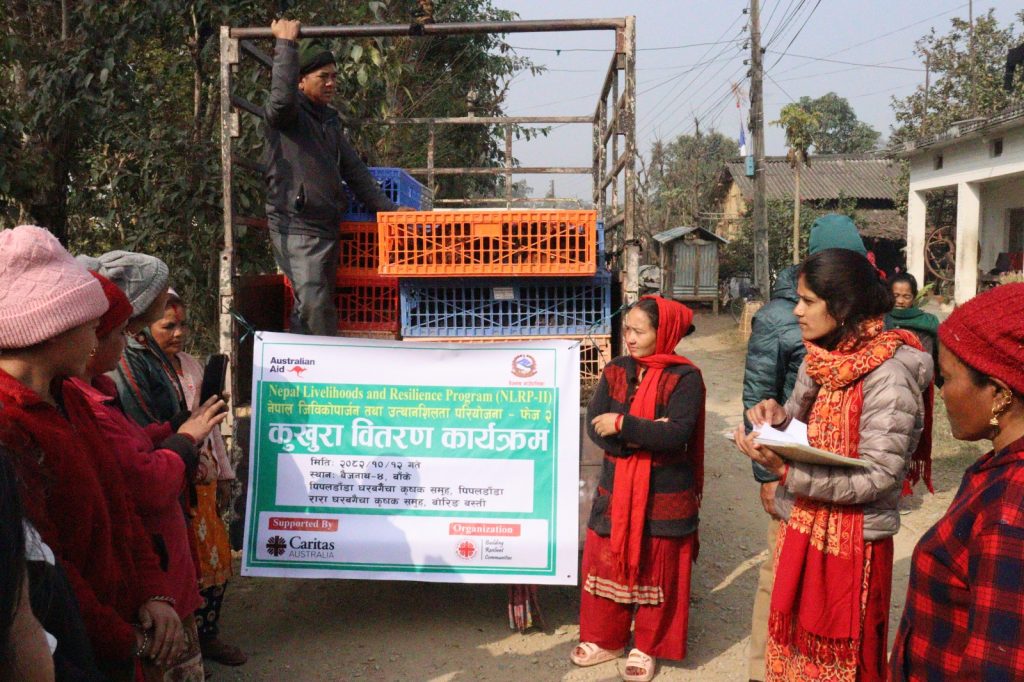
As part of efforts to enhance household nutrition and generate small income opportunities, 314 chicks were distributed on 26 January to 50 members of the Pipal Dadha and Rara Homestead Farmers Groups of Baijanath Rural Municipality Ward No. 4, Banke in the presence of the Ward Chairperson. Similarly, improved breed chickens were provided to homestead farmers of Panchpuri Municipality Ward No. 5, Surkhet under the leadership of Ward Chairperson, supporting nutrition and small-scale poultry-based income generation.


Vegetable Nursery Activities for Home Garden Farmers

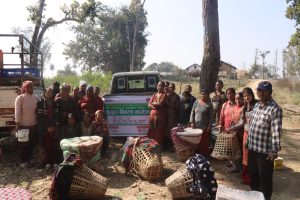
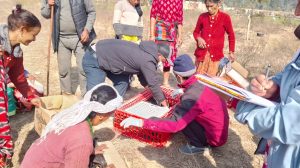
Kitchen gardening demonstrations and nursery development activities were conducted from 7 to 23 January 2026 for farmers in Banke, Surkhet, and Lalitpur. In Banke, on 10 January, the Chisapani Suryoday and Rara Home Garden Farmers Groups prepared nurseries for cucurbit vegetables such as bitter gourd, pumpkin, and ridge gourd, followed by similar activities for the Pipal Dadha and Chameli IPM Farmers Groups on 13 January. Nursery preparation for cucurbit vegetables was also carried out on 23 January at Bhawani IPM Farmers’ School, attended by 28 participants. In Lalitpur (Bagmati-2, Malta), on 7 and 9 January, the Shubhekshya Homestead Group received training on Bokashi manure, Jholmol, and effective microorganisms (EM), along with seeds of cauliflower, cabbage, and broccoli, while the Kalidevi Homestead Group received training on field preparation, seeds of cauliflower, cabbage, broccoli, and tomato, and a special class on EM-2 preparation. On 14 January, the Shubhekshya group received special sessions on mushroom cultivation with mushroom seed support, and on 16 January, they prepared Bokashi manure. In Surkhet, during monthly meetings, home garden groups conducted soil treatment, seedbed preparation, seed distribution, and crop monitoring. These activities strengthened farmers’ skills, improved vegetable production, and promoted sustainable, climate-friendly home gardening practices across all districts.






Empowering Farmers through Homestead Training
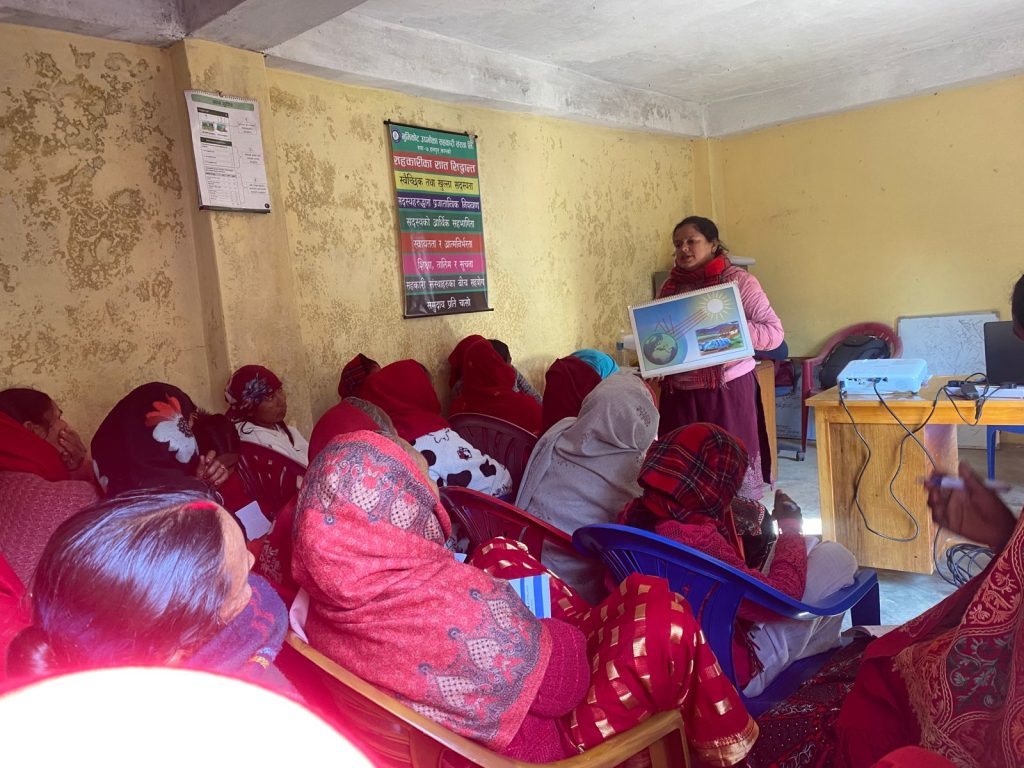
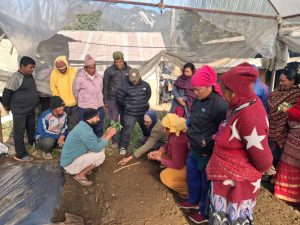
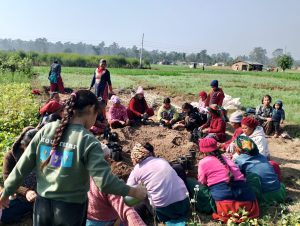
75 farmers from Rupa-7 Mayhanati Homestead Group, Rupa-4 Gairapokhari, and Khaltay Homestead Group in Kaski participated in an initial homestead training from 5 to 13 January 2026. The training aimed to strengthen farmers’ knowledge and skills in sustainable home gardening, crop management, and nutrition-sensitive agriculture. Participants learned about food security, biodiversity conservation, safe pesticide use, home garden construction and management, crop selection, layered production systems, and practical preparation and use of organic fertilizers such as Bokashi, Jholmol, and Trichoderma. The program also covered nutrition awareness, balanced diets, malnutrition, climate change impacts on agriculture, and adaptation measures, equipping farmers with the knowledge and practical skills to improve their gardens and household food security.


Plant clinic in Dailekh Supports Local Farmer


Plant clinic was conducted on 22 January 2026 in Ward No. 6, Chipin, Bhagwatimai Rural Municipality, Dailekh, organized by SOSEC Nepal in coordination with the municipality. Over 35 farmers participated, bringing samples of wheat, ginger, cauliflower, tomato, orange, lemon, banana, beans, and mustard affected by pests and diseases. Technicians identified the problems and provided practical guidance on management using bio-pesticides, insect traps, and safe chemical use, encouraging farmers to protect crops safely without excessive chemicals. The camp also strengthened collaboration between the project, local government, and farmers, enhanced farmers’ knowledge, skills, and confidence, and promoted sustainable, organic, and climate-friendly agricultural practices. Farmers appreciated receiving technical support locally, noting that it saved time and costs, and requested that such camps be conducted regularly. Refer to news published on Dailkeh online news portal: https://jwalasandesh.com/news/detail/68714/
Capacity Building of Farmers in Business Planning and Livestock Management
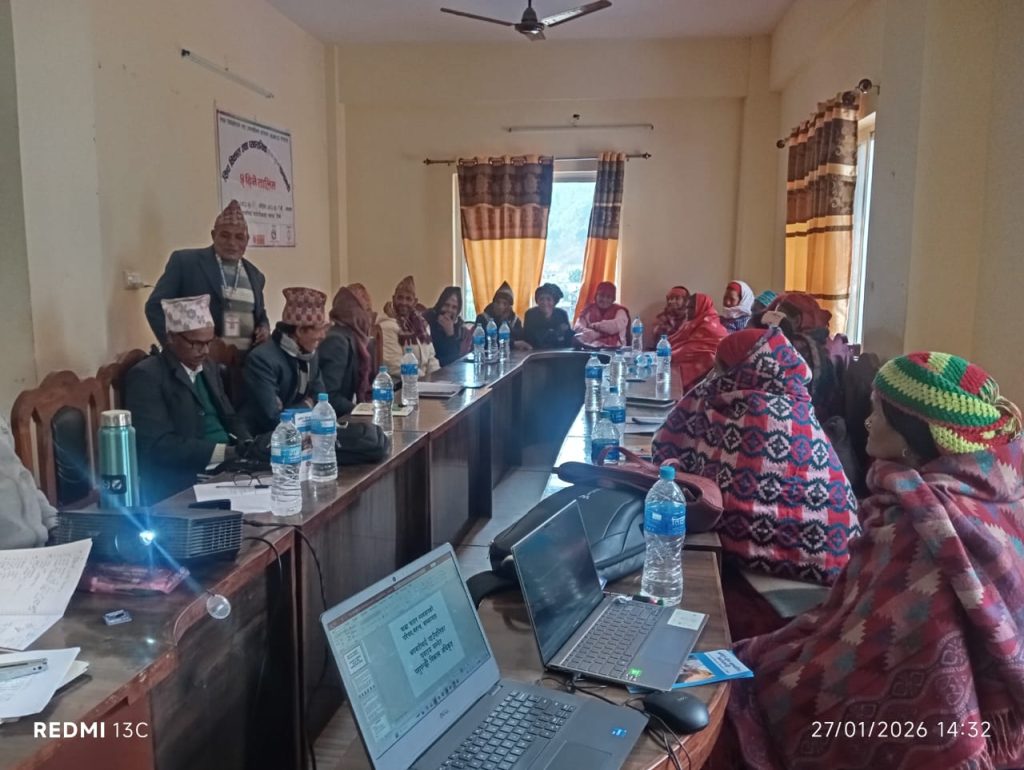
A five-days training on business planning and technical skill development training was conducted in Dailekh from 22 to 26 January 2026 with the aim of enhancing 15 enterprise farmers’ knowledge, skills, and confidence to start and manage their own businesses. The training focused on business plan preparation, identification and effective use of local resources, selection of enterprises based on market demand, creation of income-generating opportunities, and promotion of economic empowerment through small and medium enterprises. In addition, a two-day entrepreneurship and technical skill development training was conducted for the Shree Paurakhi Enterprise Group on 25 and 26 January 2026, with the participation of 25 group members. Similarly, in Surkhet, a skill-based training on goat management was conducted for the Milijuli Goat Farming Group, focusing on the identification, symptoms, and treatment of Foot and Mouth Disease (FMD / Khoret) disease in goats. The session was facilitated by the Chief of the Livestock Development Office and attended by 21 farmers, strengthening their capacity to improve livestock health and productivity.